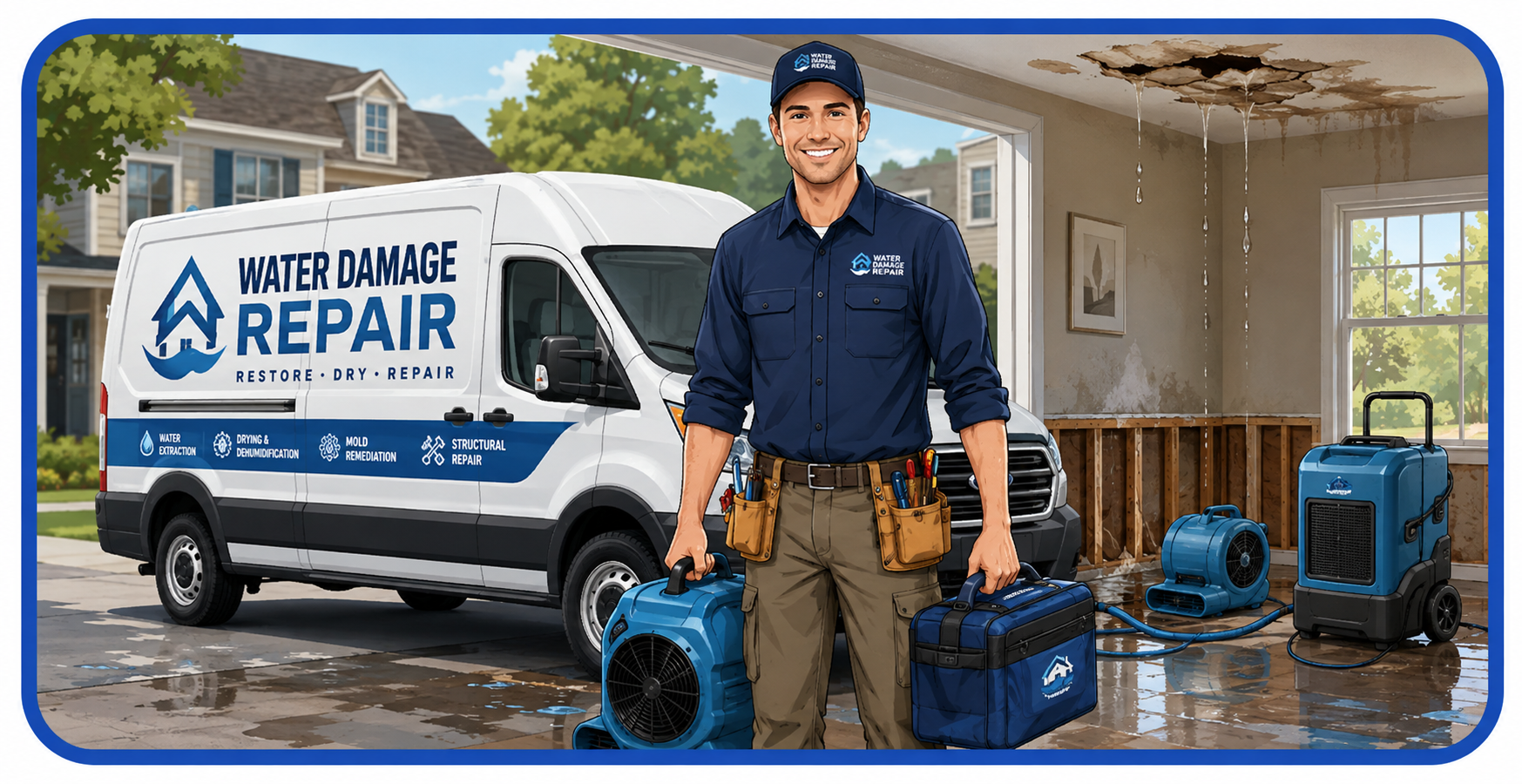
Emergency Water Calls, Any Hour
The first few hours decide how big the bill gets. Water wicks up drywall, swells particleboard subfloors, and soaks into carpet pad faster than most people expect. Inside a day or two, a clean-water leak can become a mold problem. That is why the line is staffed around the clock and why emergency calls go straight to the contractor on duty closest to your road.
An emergency visit normally begins with the crew confirming the source is off and the space is safe. They verify the supply is off, kill any circuits sitting near water, and get extraction going with portable or truck-mounted equipment. In a flooded basement or crawlspace, that often means a submersible trash pump goes in first. After that comes a moisture-meter survey, a thermal camera pass to trace migration, and the first air movers and LGR dehumidifiers.
By the end of the first visit, you should know a few things clearly. You should know which rooms are wet, what category of water is involved, and which materials can be dried in place versus removed. You should also know when the contractor plans to return to take readings and adjust the equipment. Most structures need three to five days of drying, though dense hardwood, plaster, and stone foundations can take longer. Keep the machines on, the windows closed unless the pro says to open them, and the thermostat where it was set.
- Burst pipes, broken supply lines, and leaking water heaters
- Storm runoff, roof leaks, and flooded window wells
- Failed sump pumps and seeping basement walls
- Overnight and holiday calls handled the same way